
Ultrasonic (Piezo) Scalers
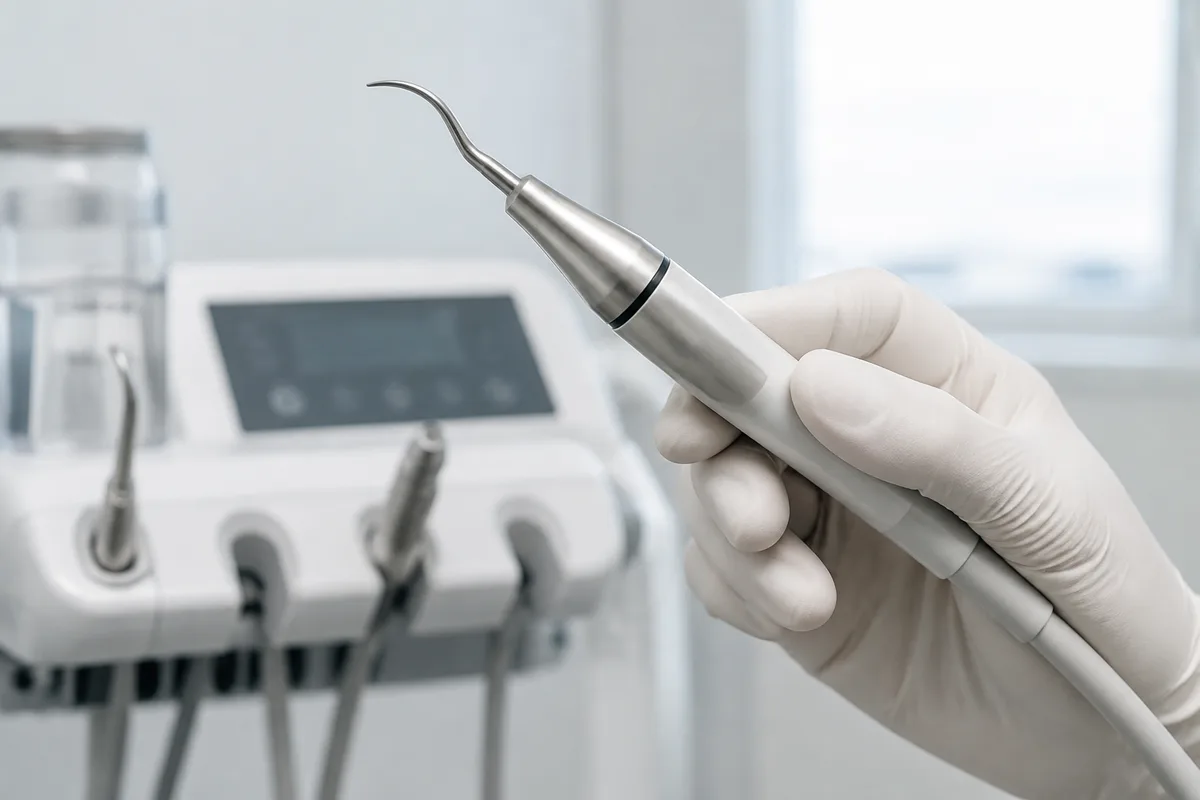
Ultrasonic (Piezo) Scalers
Gentle ultrasonic tips clear hardened tartar with far less scraping than hand instruments. If you've had a cleaning that involved a lot of hand-scraping in the past, ultrasonic (piezo) scaling is often a more comfortable way to reach the same result.
About Ultrasonic (Piezo) Scalers
Ultrasonic scalers use a metal tip that vibrates at a very high frequency, combined with a light water spray, to break up and flush away tartar and plaque along and just below the gumline. The vibration loosens hardened deposits so they lift away from the tooth surface, rather than being chipped off by hand.
Piezo-style ultrasonic devices are a refinement of older ultrasonic technology. The tip moves in a more linear pattern, which allows it to work close to the tooth surface with a lighter touch. This is different from traditional hand scaling, which relies entirely on a dentist or hygienist manually scraping tartar off with metal instruments — a method that can take longer and feel more abrasive, especially in areas where tartar has built up over time.
How we use it at Salm Dental
At Salm Dental, ultrasonic (piezo) scalers are used as part of routine cleanings, scaling and root planing, and periodontal maintenance visits. The tip is applied along the gumline and in the spaces between teeth to loosen tartar before any remaining spots are checked and refined by hand, so the visit combines the efficiency of the ultrasonic tip with the precision of manual instruments where needed.
The water flush that comes with the ultrasonic tip is managed with our high-powered suction, which keeps your mouth dry and comfortable while debris and rinse water are cleared away. For patients being evaluated for gum disease, ultrasonic scaling often follows a gum evaluation, so any areas that need extra attention are identified before cleaning begins.
What it means for you
Ultrasonic scaling is generally gentler on the teeth and gums than hand scraping alone, particularly for patients with sensitive gums or heavier tartar buildup. Because the tip does much of the initial work, cleanings can often move along more efficiently, which may mean less time in the chair for a similar level of thoroughness.
Some patients also find it easier to keep still and stay comfortable during an ultrasonic cleaning compared to extended hand-scraping, since the pressure applied is typically lighter. This can make regular cleanings and periodontal maintenance feel more manageable over time, which supports staying consistent with routine visits.
What to expect during your visit
Before scaling begins, your teeth and gums are usually checked so that any areas of concern are noted. During the cleaning, you'll feel a light vibration and a steady trickle of water as the tip passes along the gumline and between teeth; the suction keeps things comfortable by removing water and loosened debris as you go.
Most patients feel a mild tingling or buzzing sensation rather than pressure or scraping. A typical cleaning that includes ultrasonic scaling takes about the same amount of time as a standard cleaning appointment, though visits involving deeper scaling and root planing may take longer since more areas are addressed. Afterward, your teeth may feel noticeably smoother, and any lingering sensitivity is usually mild and temporary.
Frequently asked questions
Is ultrasonic scaling safe?
Yes, ultrasonic scalers are a standard part of dental cleanings and are widely used in general and periodontal care. The tip is designed to work on tartar without cutting into tooth enamel, and the water spray keeps the area cool during use.
Does ultrasonic scaling hurt?
Most patients describe it as a mild vibration or tingling sensation rather than pain. Some people with sensitive teeth or inflamed gums may notice brief tenderness in specific spots, which is worth mentioning during your visit.
How often is it used?
Ultrasonic scaling is commonly used at routine cleanings and, more intensively, during scaling and root planing or periodontal maintenance visits for patients with gum disease. How often you need it depends on how quickly tartar builds up and the condition of your gums.
Is ultrasonic scaling right for everyone?
It's suitable for most patients, including those who find hand scraping uncomfortable. Certain conditions or devices, such as some pacemakers, may call for a discussion with your dentist beforehand, so it's a good idea to mention your full medical history at your appointment.
If you're due for a cleaning or want to ask Dr. Salm whether ultrasonic scaling is right for you, reach out to Salm Dental to schedule a visit.