
Sleep Apnea Screening
Sleep Apnea Screening
Sleep apnea screening is a chairside check that helps identify signs of disordered breathing during sleep, so patients who may be affected can pursue a fuller evaluation and the right kind of care. At Salm Dental, this screening is offered as part of a routine visit, giving patients an easy way to raise concerns about snoring, daytime fatigue, or restless sleep with their dental team.
About Sleep Apnea Screening
Sleep apnea is a condition in which breathing repeatedly stops and starts during sleep, often due to the airway narrowing or collapsing. Because the mouth, jaw, and airway are closely connected, dentists are well positioned to notice physical signs that may point to a breathing issue — things like a scalloped tongue, a narrow palate, worn teeth from grinding, or a large tongue relative to the mouth.
A chairside screening is not a sleep study. It's a set of simple observations and questions, sometimes paired with a short questionnaire about sleep habits, snoring, and daytime tiredness. It is meant to flag possible risk, not to diagnose sleep apnea outright. Where earlier dental visits might not have touched on sleep at all, this kind of screening adds one more layer of attention to a health issue that often goes unnoticed until someone else points it out.
How we use it at Salm Dental
At Salm Dental, sleep apnea screening is built into the chairside exam, so it can be part of a visit you're already scheduled for rather than a separate appointment. Dr. Adam Salm, DMD, looks for physical and behavioral signs that may be worth discussing further, using the same close, detail-oriented approach he brings to other exam findings.
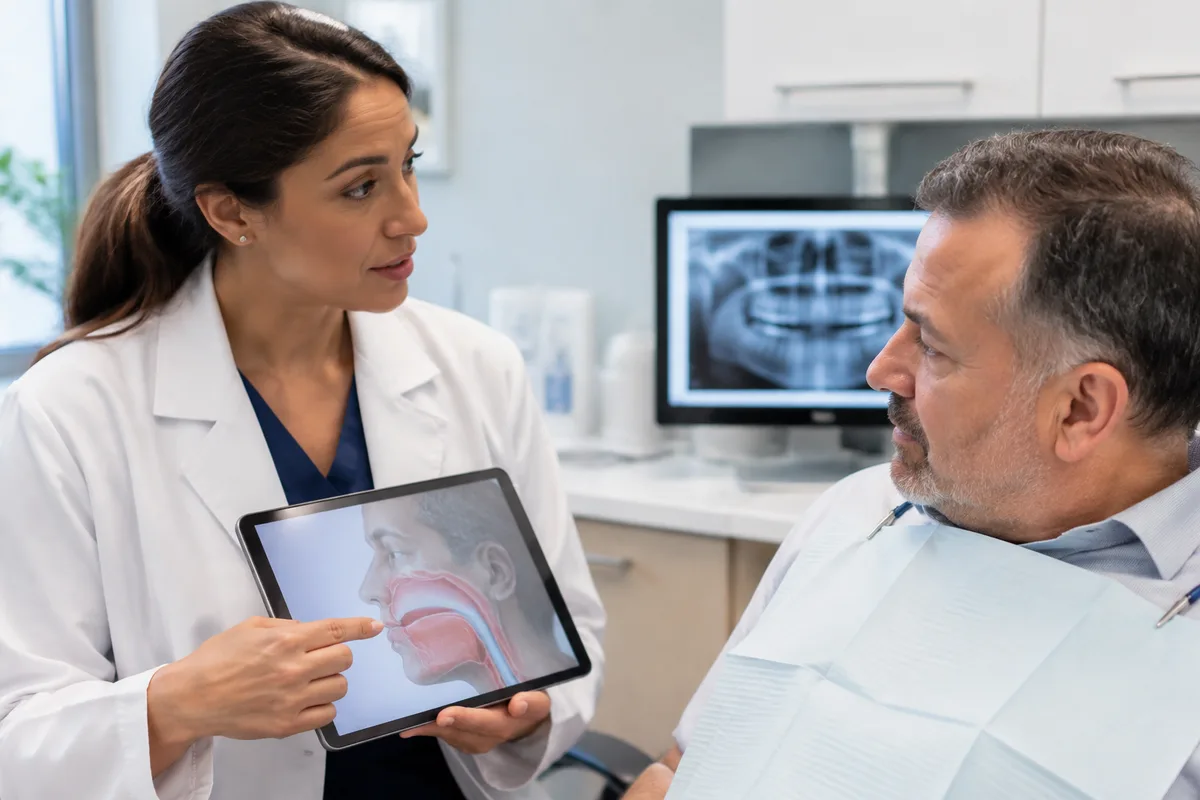
The screening often draws on tools already part of a regular checkup. The intraoral camera can help show a patient areas of concern, such as tongue position or airway space, directly on the exam room screen. Digital X-rays may offer additional context about jaw and airway anatomy when relevant. If a screening raises questions worth exploring, it can also connect naturally to conversations about night guards, which Salm Dental offers among its other services and which are sometimes used to help manage teeth grinding associated with disrupted sleep.
Because this is a screening rather than a diagnostic sleep study, any signs identified at Salm Dental are meant to guide next steps — typically a conversation about further evaluation with a sleep specialist — rather than a treatment decision made on the spot.
What it means for you
For many patients, a dental visit is a low-pressure place to bring up sleep concerns that might otherwise go unmentioned. A chairside screening adds only a few minutes to a routine appointment, so there's no separate visit required just to start the conversation.
Because the screening uses visual and verbal cues rather than complex equipment, it's comfortable and non-invasive. Patients don't need to wear sensors or spend a night hooked up to machines to get an initial sense of whether further evaluation might be worthwhile. Being able to see relevant anatomy on a screen, through tools like the intraoral camera, can also make it easier to understand what the dentist is noticing and why it might matter.
Ultimately, the value of a screening is early awareness. Catching potential signs sooner can mean a shorter path to the right kind of follow-up, whether that's a referral, a conversation about an oral appliance, or simply a note to monitor over time.
What to expect during your visit
Sleep apnea screening usually happens as part of an existing checkup, so there's no special preparation needed. During the exam, Dr. Salm will look at your airway, jaw, tongue, and bite, and may ask a few questions about snoring, sleep quality, or daytime tiredness.
The screening itself typically adds just a few minutes to your appointment. You may be shown relevant areas on the intraoral camera so you can see what's being discussed. If any signs stand out, Dr. Salm will talk through what they might mean and what a reasonable next step could look like — often a recommendation to speak with a physician or sleep specialist for a full evaluation.
Afterward, there's nothing to recover from and no downtime. You can go straight back to your day, with a clearer sense of whether sleep breathing is something worth looking into further.
Frequently asked questions
Is sleep apnea screening safe?
Yes. It involves a visual exam and a short conversation about your sleep habits — there are no instruments, sensors, or procedures involved. It carries no more risk than a standard dental checkup.
How long does the screening take?
The screening itself is brief, usually adding just a few minutes to a routine exam. It's designed to fit into an appointment you're already having, not to extend your visit significantly.
Will this replace a sleep study?
No. A chairside screening looks for signs that may warrant further evaluation, but it isn't a substitute for a formal sleep study performed by a sleep specialist. If signs are noted, the next step is usually a referral for more complete testing.
Who should ask about this screening?
Anyone who snores regularly, wakes up feeling unrested, grinds their teeth, or has been told by a partner that their breathing seems to pause during sleep may want to bring it up. It's also a reasonable topic to raise simply out of curiosity during a regular checkup.
If sleep is on your mind, bring it up at your next visit — Salm Dental is happy to talk through what a chairside sleep apnea screening can and can't tell you.