
Rotary Endodontics
Rotary Endodontics
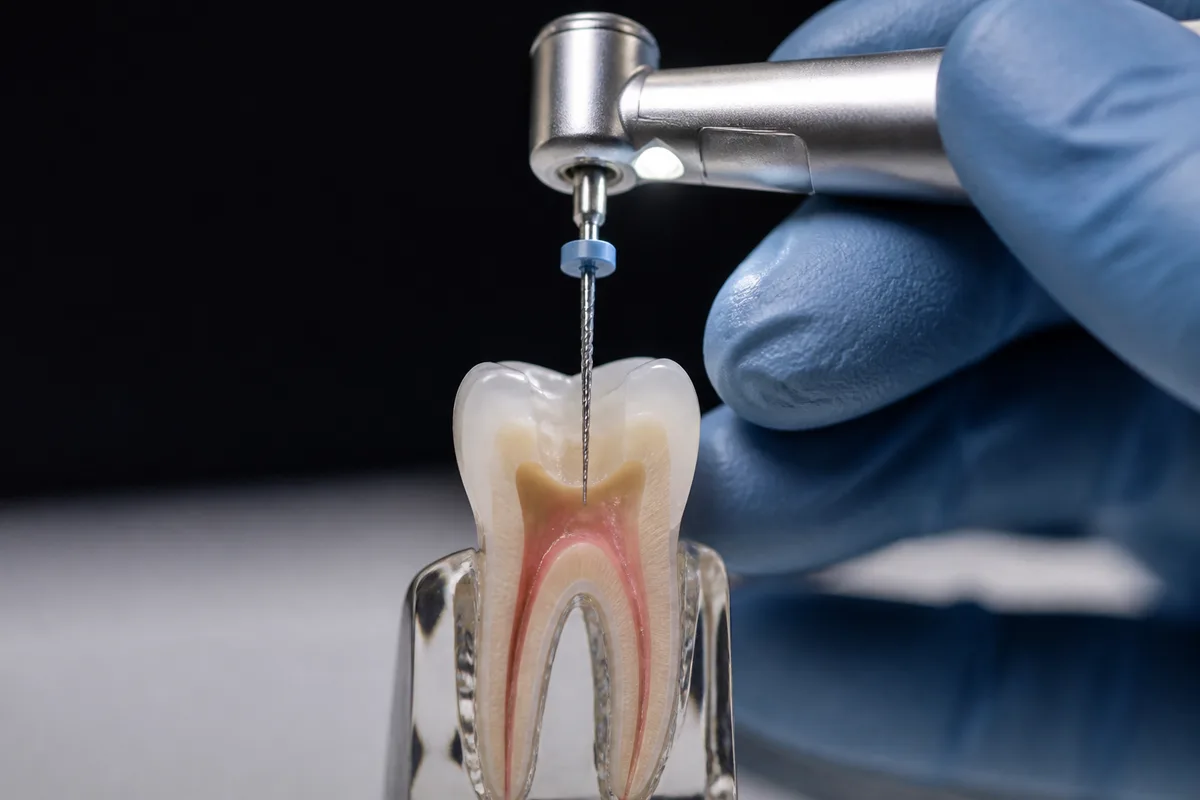
Rotary endodontics refers to the motor-driven instruments used to clean and shape the inside of a tooth during root canal therapy. At Salm Dental, this equipment supports root canal treatment performed on site, with the goal of making a necessary procedure faster and more comfortable for the patient in the chair.
About Rotary Endodontics
Root canal therapy removes infected or inflamed tissue from inside a tooth's root canal system, then cleans and seals that space so the tooth can be saved. For decades this was done almost entirely with thin hand files, worked back and forth by hand to widen and clean each canal. It was effective, but slow, and the repetitive hand motion made it harder to keep instrument movement smooth and consistent from start to finish.
Rotary endodontic systems use a small electric motor to turn flexible nickel-titanium files at a controlled speed inside the tooth. Because the files rotate continuously rather than being pushed and pulled by hand, they tend to move through curved canals more smoothly and can shape the canal in fewer steps than a fully manual approach. This is an improvement in technique and workflow, not a different treatment — the underlying goal of root canal therapy is the same.
How we use it at Salm Dental
Root canal therapy is one of the services Dr. Adam Salm, DMD provides at Salm Dental, and rotary instruments are the equipment used to carry it out. As the practice's card on this technology notes, modern rotary instruments make root canal therapy faster and more comfortable — a direct benefit of replacing slower hand-filing with a continuous, motor-driven motion.
Rotary endodontics is typically used alongside other equipment already in place at the practice. Apex locators help confirm the exact length of a root canal electronically, which supports precise shaping and filling. Digital X-rays give a clear view of the tooth's root structure before and after treatment, and dental loupes allow the working area to be viewed with magnification throughout the procedure. Together, these tools support a root canal visit that is planned and carried out with the tooth's specific anatomy in mind.
What it means for you
For patients, the main appeal of rotary instrumentation is comfort and efficiency. A continuous rotary motion generally allows a canal to be shaped in less time at the chair than a fully hand-filed approach, which can mean a shorter appointment for a procedure that already has a reputation for taking a while.
Because the files move smoothly rather than in a repeated push-pull motion, many patients also notice less vibration and pressure during treatment. Precise measurement with an apex locator, combined with clear X-ray imaging, supports accurate work inside a canal system that can't be seen directly with the eye. None of this changes what root canal therapy is for — saving a tooth that is infected or badly inflamed — but it can make the experience of getting there more manageable.
What to expect during your visit
A root canal visit typically begins with an exam and X-ray to confirm the tooth needs treatment and to map its root structure. The area is numbed before any work begins; the practice offers The Wand (STA), a computer-controlled anesthesia delivery system that administers numbing slowly, and nitrous oxide sedation is available for patients who feel anxious about the appointment.
Once the tooth is numb, an opening is made to reach the inside of the tooth, and the rotary files are used to clean out damaged tissue and shape the canal, with an apex locator confirming depth along the way. The canal is then filled and sealed, and the tooth is typically restored with a filling or crown depending on how much natural structure remains. Patients can use noise-canceling headphones during the appointment, and the treatment room is fitted with HEPA air purifiers throughout the visit. Most root canal appointments take a single visit of roughly one to two hours, though some cases require a follow-up.
Frequently asked questions
Is rotary endodontic treatment safe?
Yes. The files used are designed specifically for cleaning and shaping root canals, and their motion is controlled by the handpiece motor rather than manual pressure, which supports steady, deliberate movement inside the tooth. Numbing is administered before treatment begins, and imaging and electronic measurement help guide the work throughout.
Will I feel pain during the procedure?
The tooth and surrounding area are numbed before treatment starts, so patients typically do not feel pain during the procedure itself. Some mild pressure or vibration may be noticeable, and nitrous oxide sedation is available for patients who would like extra help staying relaxed.
How long does a root canal take with rotary instruments?
Most root canal appointments are completed in a single visit, generally taking somewhere between one and two hours depending on the tooth and how many canals it has. More complex cases occasionally require a second visit to fully complete treatment.
Who is a candidate for root canal therapy?
Root canal therapy is generally recommended for a tooth with infected, injured, or severely inflamed inner tissue that cannot heal on its own. Dr. Salm evaluates each tooth individually, using X-rays and a clinical exam, to determine whether root canal therapy or another treatment is the right path forward.
If you're dealing with tooth pain or have been told you may need a root canal, get in touch with Salm Dental to ask about rotary endodontic treatment and what a visit would involve for your specific tooth.