
Intraoral Scanner
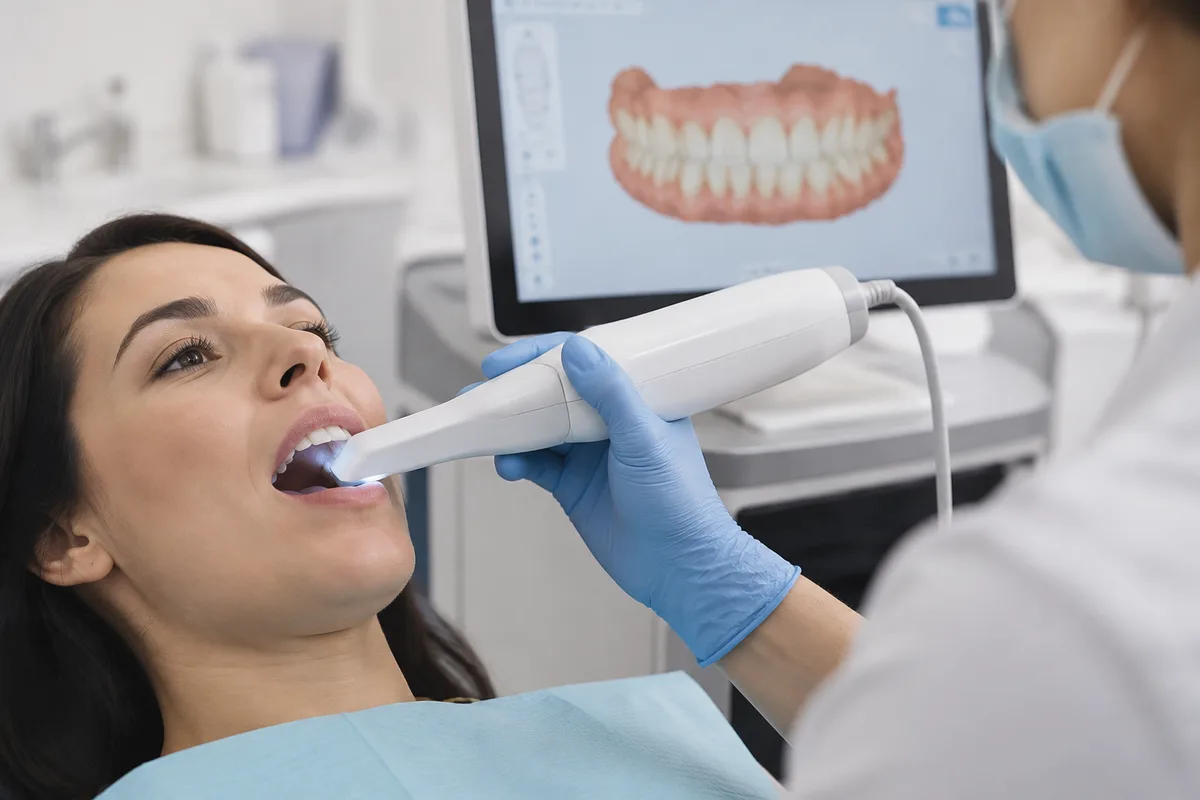
Intraoral Scanner
An intraoral scanner is a small handheld wand that captures a detailed digital map of your teeth and gums in place of a putty impression. At Salm Dental, this digital scanning replaces messy molds for aligners, crowns, and other custom appliances, giving Dr. Salm an accurate, comfortable starting point for many types of treatment.
About Intraoral Scanner
Traditional dental impressions use a tray of thick putty that sits in the mouth for several minutes while it sets. Many patients find this uncomfortable, especially if they have a strong gag reflex or a smaller mouth. An intraoral scanner replaces that process with a camera-tipped wand that is passed gently over the teeth, stitching together hundreds of images into a precise 3D digital model in real time.
Because the result is a digital file rather than a physical mold, it can be reviewed on screen immediately, adjusted if an area needs to be re-scanned, and sent electronically to a dental lab or milling unit. This has made digital scanning a common replacement for conventional impressions across many areas of general and cosmetic dentistry.
How we use it at Salm Dental
Dr. Adam Salm, DMD, uses the intraoral scanner as part of planning for clear aligners, crowns, and other custom dental appliances, avoiding the need for a traditional impression tray in many cases. The scan can also feed into related digital tools used in the office, such as Digital Smile Design for previewing cosmetic work and digital shade matching for coordinating the color of a new restoration with your natural teeth.
The scanner works alongside the practice's other diagnostic equipment, including digital X-rays and the intraoral camera, to build a fuller picture of your teeth and bite before treatment begins. For same-day crown work, a digital scan is the first step that allows the rest of the process to move forward without a separate impression visit.
What it means for you
For most patients, the biggest difference is comfort. There is no tray of putty to hold in place, no waiting for material to set, and no unpleasant taste or texture to manage. The scanning motion itself is quick and generally well tolerated, even for patients who have found impressions difficult in the past.
Digital scans also tend to be more precise than physical molds, since there is no material to shrink, distort, or trap air bubbles as it sets. That precision can translate into a better-fitting aligner, crown, or appliance, and it gives you and Dr. Salm a shared image on screen to look at and discuss together, rather than relying on a physical model you cannot easily see yourself.
Because the file is digital, it can also be stored and referenced over time, which is useful if a case needs a follow-up scan or if Dr. Salm wants to compare how your teeth or bite have changed.
What to expect during your visit
Before scanning, Dr. Salm or a member of the team will dry the teeth being scanned so the wand can capture a clean, clear image. No numbing or preparation is needed for the scan itself. You will be asked to keep your mouth open in a relaxed position while the wand is moved slowly around the outside, inside, and biting surfaces of your teeth.
The scan is usually completed in a few minutes, though the exact time depends on how many teeth are being captured and whether both the upper and lower arches, plus a bite record, are needed. You may feel light pressure from the wand against your cheek or tongue, but there is no discomfort from the scanning process itself.
Once the scan is complete, you can see the digital model on the screen right away. From there, Dr. Salm reviews the image with you and moves forward with the next step, whether that is designing an aligner, planning a crown, or sending the file out for fabrication.
Frequently asked questions
Is intraoral scanning safe?
Yes. The scanner uses light and a camera to capture images, with no radiation and no sharp instruments involved. It is considered a comfortable, low-risk alternative to a traditional impression.
Does the scan hurt or make me gag?
Most patients do not find the scan uncomfortable. Because there is no thick material sitting in the mouth, many people who struggle with a gag reflex during traditional impressions find the wand easier to tolerate.
How long does a scan take?
A full scan of one or both arches typically takes just a few minutes. The exact time varies based on how many teeth need to be captured and what the scan will be used for.
Who is intraoral scanning suitable for?
Digital scanning can be used for most patients who need a custom appliance, crown, or aligner, including those who have found traditional impression trays uncomfortable in the past. Dr. Salm can advise whether a digital scan or another approach is best for your specific situation.
If you have questions about intraoral scanning or would like to see how it fits into your treatment, reach out to Salm Dental to schedule a visit.