
Intraoral Camera
Intraoral Camera
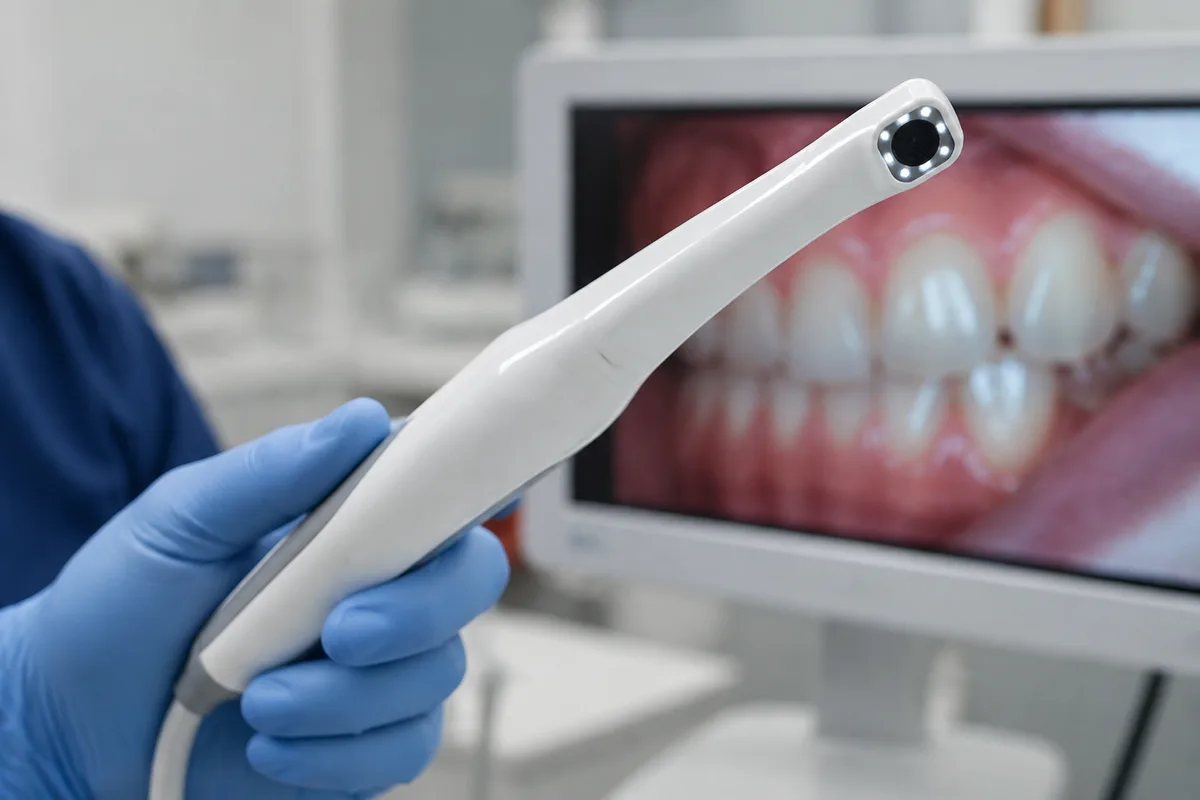
An intraoral camera is a small, pen-sized camera that captures close-up images of your teeth and gums, displaying them in real time on a screen right beside the exam chair. At Salm Dental, this tool is part of how we explain what we see and why we recommend the care we do, so you're never left guessing about the state of your own mouth.
About Intraoral Camera
Before intraoral cameras became common, dentists relied on verbal descriptions, small hand mirrors, or X-rays alone to explain findings. A cracked tooth, a worn filling, or early gum inflammation might be visible to the trained eye but hard for a patient to picture. The intraoral camera closes that gap by magnifying and displaying exactly what the dentist is looking at.
The camera itself is lightweight and about the size of a large pen, with a light source and lens at the tip. It's moved gently around the mouth, capturing still images or live video of individual teeth, gum tissue, old restorations, or areas of concern. Those images appear instantly on a nearby monitor, and can be saved to your chart for comparison at future visits.
How we use it at Salm Dental
At Salm Dental, the intraoral camera is used chairside during routine exams so you can see exactly what Dr. Adam Salm, DMD sees, on the exam room screen, as he reviews your teeth and gums. Rather than describing a cracked filling or a spot of wear in the abstract, he can point to the actual image and walk through what it means and what the options are.
The camera works alongside the practice's other diagnostic tools rather than in place of them. Digital X-rays give a view beneath the surface, while the intraoral camera shows surface detail — stained grooves, chipped edges, receding gum lines, or the texture of tissue during a gum evaluation. Used together, they give a more complete picture during comprehensive and periodic exams, and can support an oral cancer screening by making it easier to flag areas worth a closer look.
Because the images are digital, they can be stored and referenced again at a later visit, which is useful for tracking whether a watched area of wear or a small spot is changing over time.
What it means for you
For patients, the main benefit is clarity. Instead of taking a dentist's word for a diagnosis, you can see the same image they're looking at and ask questions about it directly. This tends to make conversations about treatment options feel more collaborative and less one-sided.
It can also help with early detection in a general sense — surface-level issues like cracks, worn edges, or discoloration are often easier to catch when magnified and displayed clearly, rather than glimpsed briefly in a small mirror. And because the images are simply photographs, there's no discomfort involved beyond the normal experience of having a small instrument moved around inside your mouth.
Finally, having a visual record over time can make it easier to understand why a watch-and-wait approach or a more immediate treatment was recommended, since you can compare images side by side.
What to expect during your visit
Using the intraoral camera adds only a few minutes to a routine exam. After your teeth are examined in the usual way, the dentist will move the small camera wand around your mouth, pausing on any areas worth a closer look. You'll feel the wand touch your teeth and gums lightly, similar to a mirror or explorer tool, but there's no pressure, sound, or sensation beyond that.
As images appear on the screen, you can expect a brief explanation of what you're looking at — whether it's a healthy area, an old filling showing wear, or a spot that will simply be monitored going forward. No special preparation is needed beforehand, and there's no recovery time afterward; you can go straight back to your day once your exam is complete.
Frequently asked questions
Is an intraoral camera safe?
Yes. It's simply a small camera with a light, so there's no radiation or exposure involved, unlike an X-ray. It can be used as often as needed without any added risk.
Will it be uncomfortable?
Most patients find it comfortable. The wand is smooth and lightweight, and it's moved gently around the mouth the same way a hand mirror would be, without pressure or noise.
How long does it take?
Capturing images typically takes just a few minutes and is usually done as part of a regular exam rather than as a separate appointment.
Is it suitable for everyone, including children?
The intraoral camera is generally suitable for patients of all ages, since it involves nothing more than a light and a lens. It's often especially helpful for younger patients, who may find it easier to understand a visual image than a verbal explanation.
If you'd like to see your own exam images on screen at your next visit, reach out to Salm Dental to ask about the intraoral camera or to schedule an appointment.