
Icon Resin Infiltration
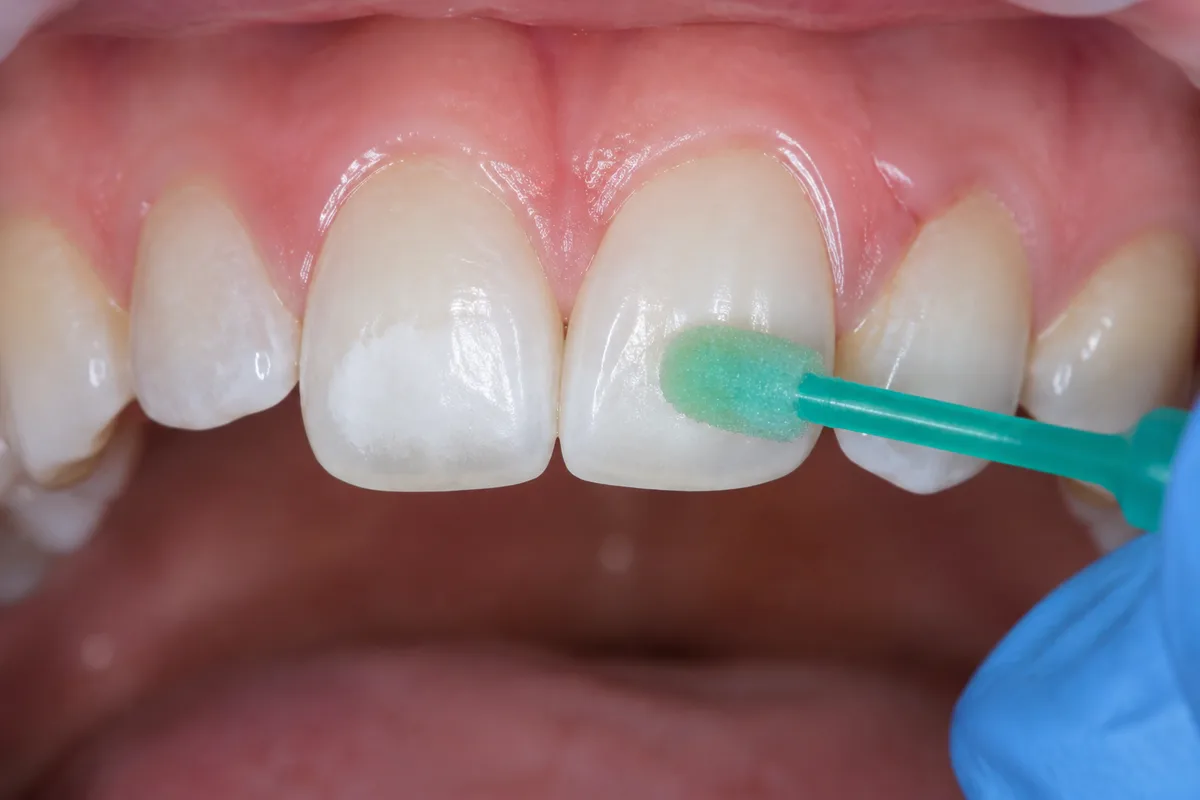
Icon Resin Infiltration
Icon Resin Infiltration is a no-drill treatment that can stop very early tooth decay and soften the appearance of white spots on enamel, without anesthesia or removing healthy tooth structure. At Salm Dental, it is one of the conservative options Dr. Salm may recommend when a cavity is caught early or when white spots are affecting the look of a smile.
About Icon Resin Infiltration
Icon works by using a specially formulated resin that flows into the microscopic pores of enamel where early decay or mineral loss has occurred. Once the resin is applied and cured, it seals off the porous area, halting the progression of the lesion and often making white spots far less visible by matching the surrounding enamel's translucency.
Before treatments like this existed, dentists typically had two choices for early decay: watch and wait, or drill and fill. Icon was developed to fill the gap between those extremes, giving patients a way to intervene early without losing any tooth structure. It is not a substitute for a filling once decay has reached the dentin, but for lesions caught at the enamel stage, it offers a genuinely different path.
How we use it at Salm Dental
Dr. Adam Salm, DMD, evaluates whether a lesion is a good candidate for resin infiltration as part of a comprehensive exam. Early decay and white spots are often first noticed through a combination of tools already used at each visit, including digital X-rays, the caries detection laser, and Overjet AI review of X-ray images, which together help identify areas of enamel demineralization before they progress further.
The intraoral camera lets you see the same spot Dr. Salm is looking at, so the conversation about whether Icon is appropriate happens with a clear picture in front of you rather than a description alone. When the goal includes matching the treated area to the surrounding tooth, digital shade matching helps guide a natural-looking result. For decay that has advanced past the point where infiltration alone would help, air abrasion or a traditional tooth-colored filling may be discussed instead.
What it means for you
The main appeal of resin infiltration is that it treats a problem without removing tooth structure or, in many cases, without the need for numbing at all. That makes it a comfortable option for patients who are anxious about drilling or injections, and it can mean a shorter visit than a traditional filling would require.
Because the treatment addresses lesions early, it can also reduce the chance that a small area of demineralization turns into something that needs a more involved restoration later. For white spots that bother patients cosmetically — often from earlier orthodontic treatment, fluorosis, or the natural texture of enamel — infiltration offers a way to improve appearance without shaving down or covering the tooth with a veneer or bonding material.
What to expect during your visit
A visit for Icon typically begins with an exam to confirm the lesion is still at the enamel stage, using X-rays, the intraoral camera, or the caries detection laser as needed. The tooth is isolated and the surface is gently prepared with a mild etching gel to open the enamel pores, then rinsed and dried.
The resin is applied in thin layers and cured with a curing light, sometimes repeated a few times so the resin fully penetrates the lesion. Most patients feel little to nothing during the process, since it does not involve cutting into the tooth. The appointment is generally shorter than a filling, and you can eat and go about your day normally afterward, since no anesthesia is typically needed.
Frequently asked questions
Is Icon Resin Infiltration safe?
Yes. The resin and etching gel used in the procedure have been developed specifically for use on enamel, and the process does not involve drilling, cutting, or removing healthy tooth structure. It is considered a conservative, minimally invasive option compared to a traditional filling.
Does the treatment hurt?
Most patients do not need numbing for Icon, since the treatment does not reach the nerve or involve any drilling. Some people feel mild sensitivity to the etching gel, but the process is generally described as comfortable.
How long does it take?
A single tooth can often be treated in one appointment, with the etching, resin application, and curing steps completed in that visit. The exact time can vary depending on how many teeth are being treated and how many layers of resin are needed.
Who is a good candidate for Icon?
Icon is best suited for early enamel-stage decay or white spot lesions that have not progressed into the deeper layer of the tooth. Dr. Salm can determine candidacy during an exam using digital X-rays and other diagnostic tools on hand at the practice.
If you have noticed a white spot on a tooth or want to ask whether Icon Resin Infiltration is right for you, reach out to Salm Dental to schedule a visit with Dr. Salm.