
Fluorescent Cancer Screening
Fluorescent Cancer Screening
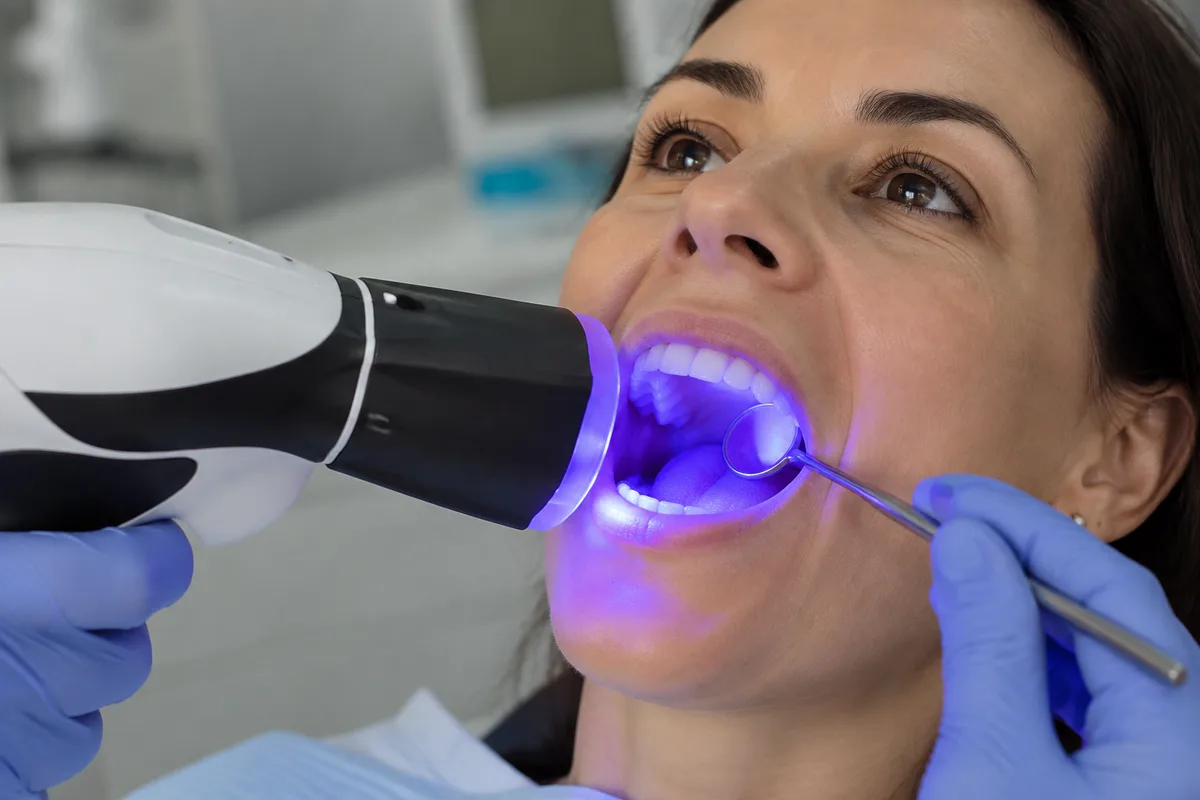
Fluorescent Cancer Screening uses a specialized light to highlight changes in oral soft tissue that can be difficult to see under normal exam lighting. It is a quick, non-invasive addition to a routine oral exam, meant to give Dr. Salm another way to look closely at the tissues of your mouth, tongue, and throat.
About Fluorescent Cancer Screening
The screening works by shining a specific wavelength of light into the mouth. Healthy tissue and abnormal tissue absorb and reflect this light differently, so areas that might otherwise blend in under a standard exam can stand out more clearly to the dentist's eye. This approach builds on the traditional visual and tactile oral cancer exam, adding an extra layer of visual information rather than replacing the hands-on check dentists have long relied on.
Because the exam relies on light rather than X-rays or contrast dye, it does not expose you to radiation and does not require any injections or special preparation. It is typically performed as part of a regular dental visit, taking only a few extra minutes.
How we use it at Salm Dental
At Salm Dental, the fluorescent light exam is used as part of a thorough look at the soft tissues of the mouth, helping Dr. Salm, DMD, spot changes that may warrant closer attention. It complements the Oral Cancer Screenings already included in comprehensive and periodic exams, giving an additional visual reference alongside the standard check of the lips, cheeks, tongue, and throat.
The exam is often paired with the practice's Intraoral Camera, which lets you see the same view of your mouth that Dr. Salm sees on the exam room screen. This can make it easier to understand what is being examined and why, and to follow along if any area is flagged for monitoring. The practice also uses fluorescence-based technology for a different purpose — the Caries Detection Laser identifies early tooth decay — so patients may encounter fluorescence used in more than one way during a visit, each aimed at a distinct type of tissue change.
What it means for you
An extra layer of visual screening can offer patients more confidence that their soft tissues are being examined closely, not just by touch and general appearance but with a tool designed to highlight subtle differences. For many people, oral cancer screening is a quiet, easy-to-overlook part of a dental visit, and having it built into the checkup routine means it happens automatically, without requiring a separate appointment.
The process adds very little time to a visit and involves no discomfort, no needles, and no recovery period. It also gives Dr. Salm a clear visual reference to discuss directly with you, using the intraoral camera, if anything is noted during the exam.
What to expect during your visit
The fluorescent light exam is generally folded into a routine cleaning or checkup, so there is nothing special to prepare beforehand. After your regular exam, Dr. Salm will dim the room lighting slightly and use the fluorescent light to check the tissues of your mouth, cheeks, tongue, and throat. You may notice the light itself and a brief change in how the tissues appear, but the process is painless and takes only a couple of minutes.
Once the light exam is complete, Dr. Salm will let you know what was observed. If anything looks like it warrants a closer look or follow-up, that will be discussed with you directly, using the intraoral camera if helpful, before you leave the office.
Frequently asked questions
Is the fluorescent light exam safe?
Yes. The exam uses a specific type of light rather than radiation, dye, or any injected substance, so there is no exposure risk involved. It is considered a gentle, non-invasive addition to a standard oral exam.
Does the exam hurt or feel uncomfortable?
No. The light is simply shone into the mouth while Dr. Salm looks at the tissues, similar to how a regular exam light is used. Most patients notice little more than a brief change in lighting and do not report any discomfort.
How often is this screening done?
The fluorescent light exam is typically included as part of a routine dental checkup rather than scheduled as its own separate visit. How often it is repeated follows the same schedule as your regular exams and cleanings.
Who is this screening appropriate for?
Because it is quick and non-invasive, the fluorescent light exam can generally be included for adult patients as part of a routine visit. Dr. Salm can discuss whether it makes sense to include as part of your specific exam.
If you have questions about Fluorescent Cancer Screening or would like it included at your next visit, reach out to Salm Dental to book an appointment.