
Digital X-Rays
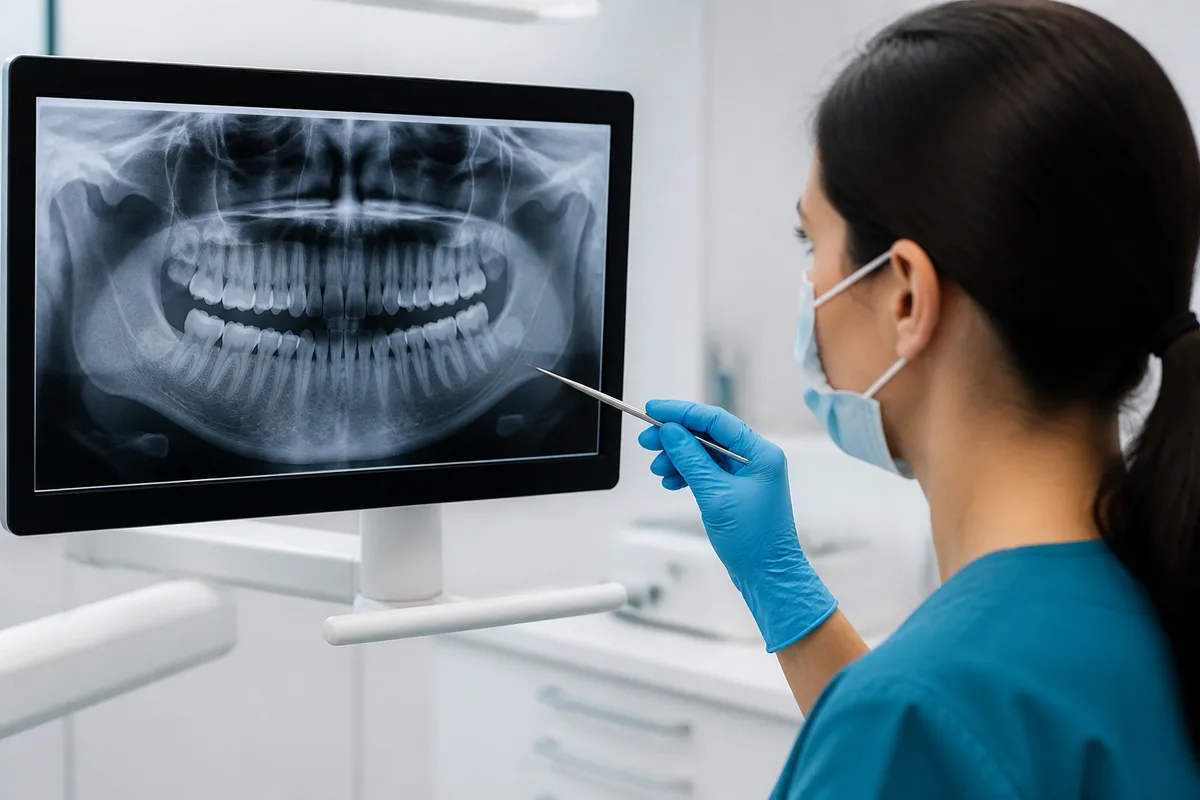
Digital X-Rays
Digital X-rays give Dr. Salm a clear, low-radiation view of what's happening beneath the surface of your teeth and gums — the decay, bone changes, and root conditions that a visual exam alone can't show. They're a routine part of most checkups at Salm Dental and a key tool whenever a more detailed diagnosis is needed.
About Digital X-Rays
Digital X-rays use an electronic sensor in place of traditional film to capture images of your teeth, roots, and supporting bone. The sensor sends the image to a computer screen within seconds, where it can be viewed, enlarged, and compared against past images. This replaces the older film-based process, which required chemical developing and a noticeably higher radiation dose.
Because the sensor is more sensitive to X-ray exposure than film, digital systems can produce a usable image with significantly less radiation. The images are also easy to store, retrieve, and share, which makes it simple for a dentist to track subtle changes in a tooth or bone over months or years.
How we use it at Salm Dental
Dr. Adam Salm, DMD, uses digital X-rays as part of the diagnostic picture at checkups, giving him a fast, clear look at areas that aren't visible during a visual exam alone — between teeth, below the gumline, and inside the jawbone. The low radiation dose and quick image turnaround mean the process fits smoothly into a routine visit without adding much time to your appointment.
At Salm Dental, digital X-rays are reviewed alongside Overjet AI X-Ray Analysis, which gives a second set of eyes on every image to help flag areas worth a closer look. X-rays are also used together with other diagnostic tools on hand, such as the intraoral camera and caries detection laser, so that findings from one method can be checked against another before any treatment is recommended.
X-rays commonly come into play alongside services like comprehensive exams, root canal therapy, and implant planning, where a clear view of root length, bone structure, or hidden decay is essential to treating precisely.
What it means for you
Digital X-rays offer several practical advantages for patients:
- Lower radiation exposure — digital sensors typically require less radiation than older film X-rays to produce a usable image.
- Faster results — images appear on screen within seconds, rather than requiring time to develop.
- Clearer communication — you can see the same image your dentist is looking at, which makes it easier to understand a diagnosis.
- Better tracking over time — digital images store easily, so changes in a tooth or bone can be compared visit to visit.
- Less waiting — no chemical processing means the diagnostic step of your visit moves along quickly.
What to expect during your visit
Before an X-ray is taken, you'll be asked to wear a lead apron or thyroid collar for added protection, and you'll bite down gently on a small sensor or hold it in place for a moment. The process itself is quick and painless — most individual images take only a second or two to capture, and a full set for a checkup is usually completed within a few minutes.
Once the images appear on the screen, Dr. Salm reviews them as part of your exam, often showing you the areas of interest directly. If anything needs a closer look, he may recommend an additional image or a follow-up visit. Afterward, there's no recovery time needed — you can go straight on with the rest of your appointment or your day.
Frequently asked questions
Are digital X-rays safe?
Digital X-rays use a low dose of radiation, generally less than older film-based X-rays required. Lead aprons and collars are used for extra protection during imaging. Your dentist will only recommend the X-rays needed for your specific situation.
How long does it take?
A single X-ray image takes only a moment to capture, and a full set for a routine checkup is typically completed within a few minutes. The image appears on screen almost immediately, so there's little added time to your visit.
How often will I need X-rays?
How frequently X-rays are needed depends on your individual dental history, risk of decay or gum disease, and any specific symptoms or treatment being planned. Your dentist will let you know what's appropriate for your situation at each visit.
Is this suitable for children or people who are anxious about X-rays?
Digital X-rays are commonly used for patients of all ages, and the low radiation dose and quick imaging time make the process easier for anyone who feels uneasy about dental visits. If you have specific concerns, it's worth mentioning them before your appointment.
If you have questions about digital X-rays or would like to schedule a checkup, reach out to Salm Dental — we're happy to talk through what to expect.