
Digital Shade Matching
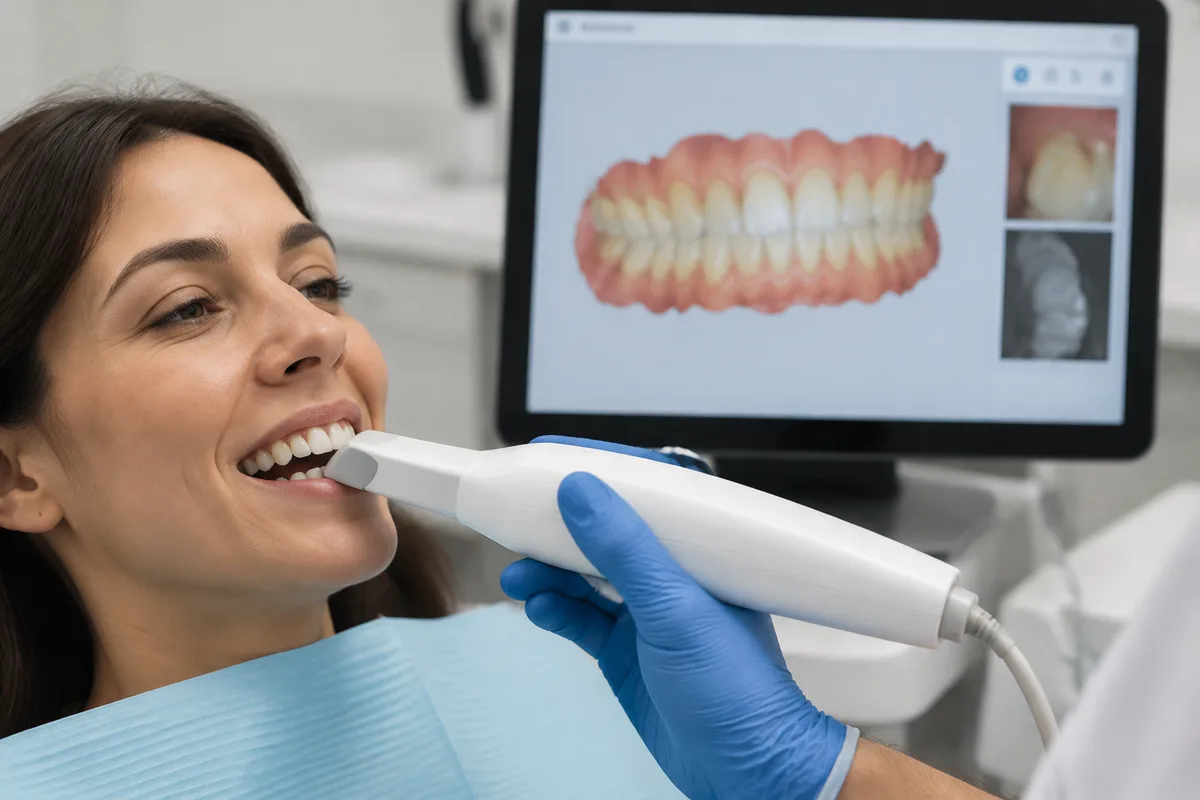
Digital Shade Matching
When a tooth needs a crown, a veneer, or a filling on a visible surface, matching the new material to your natural tooth color is one of the details that determines whether the result looks seamless. At Salm Dental, digital shade matching is used to take that guesswork out of the process, giving Dr. Salm a precise, repeatable reading of your tooth's color before any restoration is made.
About Digital Shade Matching
Digital shade matching uses an electronic device to read the color, translucency, and shade characteristics of a tooth, rather than relying solely on the human eye and a handheld shade guide under office lighting. The device captures a numeric or digital reading of the tooth's surface, which can then be shared directly with a dental lab or an in-office milling system.
Traditional shade matching depends heavily on lighting conditions, the angle of the tooth, and the individual judgment of whoever is holding the shade tab up to your teeth. Colors can look different under fluorescent light, daylight, or exam-room lighting, which sometimes led to restorations that didn't quite blend in once a patient left the chair. Digital shade matching reduces that variability by recording a consistent, repeatable measurement.
How we use it at Salm Dental
At Salm Dental, a digital shade reading is taken to match new restorations to the natural color of your existing teeth. This is typically done alongside restorative or cosmetic treatment, such as tooth-colored fillings, crowns, veneers, or bonding, where blending the new material with surrounding teeth is part of the goal.
The shade reading works well together with some of the other tools in the office. An intraoral camera can capture a close-up image of the tooth and surrounding teeth for reference, and for patients considering veneers or a broader cosmetic change, digital smile design can be used to preview how a shade and shape will look before any preparation begins. Dr. Adam Salm, DMD, oversees the shade selection as part of planning restorative and cosmetic work, so the color chosen reflects both the reading and the clinical picture of the tooth.
Because the reading is digital, it can be recorded and referenced again later — useful if a restoration needs adjustment, or if a patient returns for a second procedure and the practice wants to keep results consistent with earlier work.
What it means for you
For patients, the main benefit of digital shade matching is a more predictable result. A restoration that closely matches the surrounding teeth is less noticeable, which matters most on front teeth or anywhere a mismatch would be easy to spot.
It also improves communication. A digital reading gives the dentist and the lab a shared, objective reference point, rather than a description based on memory or a quick visual check. That can reduce the chances of a restoration coming back from the lab needing to be adjusted or remade because the color wasn't quite right.
- Consistency — the same reading can be used across a visit, or referenced again later.
- Clearer records — a digital shade value is easier to document and communicate than a verbal description.
- No added discomfort — the reading itself is quick and does not involve any drilling, numbing, or pressure on the tooth.
What to expect during your visit
Digital shade matching is a short, simple step within a larger appointment, not a visit on its own. Before any preparation of the tooth begins, the shade-matching device is held near the tooth for a moment while it captures the color reading. There's no sound, no vibration, and nothing to feel — you may notice a brief light or scan, similar to taking a quick photograph.
Once the reading is taken, it's used to guide the color of the restorative material, whether that's a filling placed the same day or a crown or veneer sent to a dental lab. If the practice is also using an intraoral camera or digital smile design for the same treatment, those images and the shade reading are considered together as part of planning the final result. The reading itself adds only a minute or two to the appointment and does not change how long the rest of the procedure takes.
Frequently asked questions
Is digital shade matching uncomfortable?
No. The device is simply held near the tooth to capture a reading, and there is no drilling, pressure, or numbing involved in this step. Most patients don't notice anything beyond a brief pause while the reading is taken.
How long does a shade reading take?
The reading itself typically takes just a minute or two. It's performed as one step within a longer restorative or cosmetic appointment, so it doesn't add meaningfully to your overall visit time.
Who might need digital shade matching?
Anyone getting a tooth-colored filling, crown, veneer, or bonding on a visible tooth may benefit from a digital shade reading, since matching the restoration to surrounding teeth is part of a natural-looking result. It's especially relevant for front teeth, where color differences are easier to notice.
Is digital shade matching safe?
Yes. The device only reads light reflected from the tooth surface and does not use radiation or require contact beyond a light touch. It's considered a routine, low-risk part of restorative and cosmetic planning.
If you're planning a filling, crown, veneer, or another restoration and want to know more about how digital shade matching fits into your treatment, reach out to Salm Dental to ask or schedule a visit.