
Caries Detection Laser
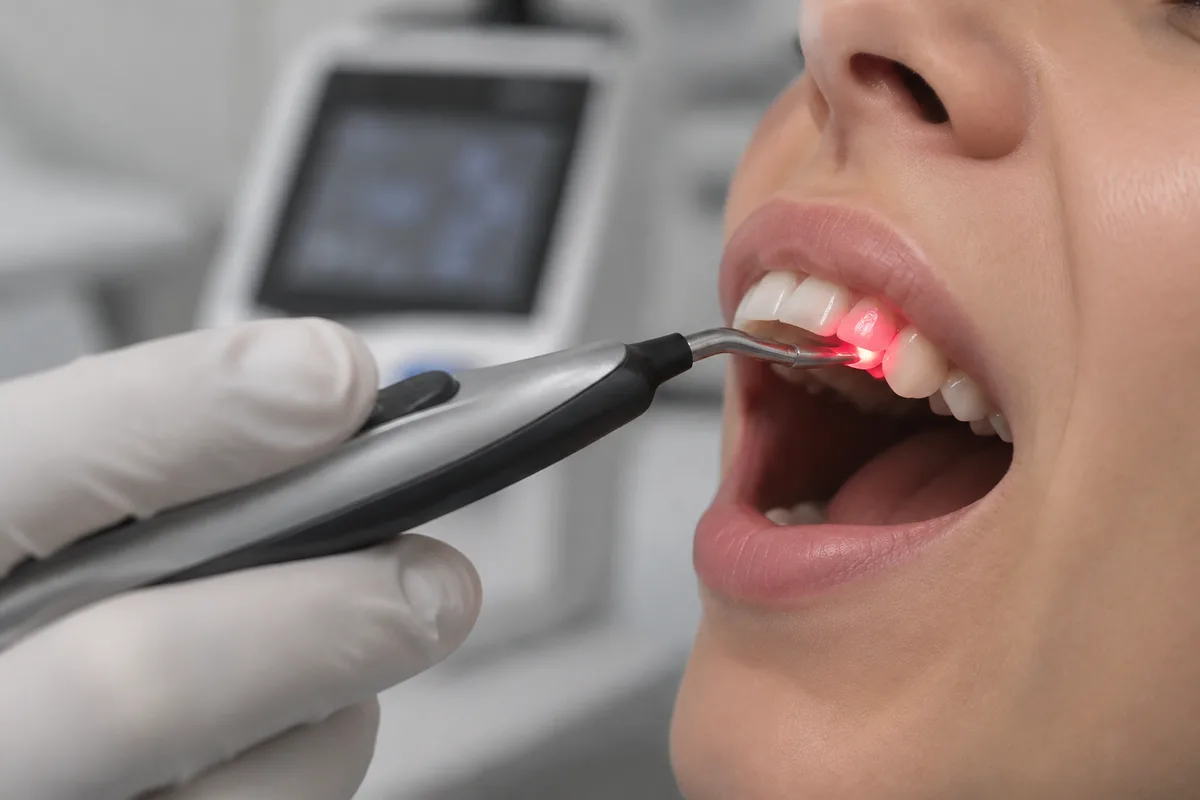
Caries Detection Laser
Finding a cavity while it is still microscopic gives you far more options than finding it after it has grown. Salm Dental uses a caries detection laser to spot early decay that can be easy to miss with an exam or X-ray alone, so small problems can often be managed conservatively before they become bigger ones.
About Caries Detection Laser
A caries detection laser uses fluorescence to read the health of tooth structure. Healthy enamel and dentin fluoresce differently under the laser's light than decayed tissue does, and the device translates that difference into a simple reading or sound that flags areas worth a closer look. It does not replace a visual exam or X-rays; it adds another layer of information, especially in the tight grooves and pits of back teeth where decay likes to hide.
Before tools like this existed, dentists relied mainly on visual inspection, a dental explorer, and X-rays, all of which can miss decay that is just beginning or tucked into a groove. Fluorescence detection helps close that gap by picking up changes in tooth structure before they are visible to the eye or show up clearly on film.
How we use it at Salm Dental
At Salm Dental, the caries detection laser is one part of a broader diagnostic approach that Dr. Adam Salm, DMD, uses during exams and cleanings. It works alongside digital X-rays, which give a fast, low-radiation view of the teeth, and the intraoral camera, which lets you see on screen exactly what Dr. Salm is looking at. Together, these tools build a fuller picture of each tooth than any single method alone.
When the laser flags an area of concern, Dr. Salm can decide on the most conservative path forward. In some cases that means simply monitoring the spot at future visits. In others, it may lead to a minimally invasive option such as air abrasion or Icon resin infiltration, both of which can address very early decay without a traditional drill. The goal is to catch changes early enough that treatment stays simple.
What it means for you
Catching decay early generally means smaller, more conservative treatment. A cavity found at its earliest stage may be manageable with a minimal filling or even a no-drill option, rather than a larger restoration down the road. Early detection can also mean fewer surprises at future visits, since you and your dentist are tracking changes over time instead of discovering a problem after it has already progressed.
Because the laser reading is quick and painless, it adds very little time to a routine exam. There is no discomfort involved, no radiation, and no special preparation — it simply gives your dentist another data point to consider alongside what they see and what shows up on X-ray.
What to expect during your visit
The caries detection laser is typically used during a routine exam or cleaning, after your teeth have been cleaned of surface debris. Dr. Salm will pass the small laser tip gently over the chewing surfaces of your teeth, particularly the grooves and pits where decay often starts. You may hear a soft tone or see a number change on a display as the device takes its readings — there is no pressure, heat, or sensation to speak of.
This step usually adds only a few minutes to your appointment. If an area reads as a possible concern, Dr. Salm will look at it more closely, often comparing it with the intraoral camera image or your digital X-rays, and will talk with you about whether it makes sense to watch it, treat it conservatively, or address it right away. No extra preparation is needed beforehand — it fits naturally into a standard checkup.
Frequently asked questions
Is the caries detection laser safe?
Yes. It uses a low-level light to read fluorescence in tooth structure and involves no radiation, needles, or drilling. It is considered a gentle, non-invasive way to gather additional diagnostic information during a routine visit.
Does it replace the need for X-rays?
No. The laser is a complement to X-rays and a visual exam, not a replacement. Each method picks up different information, and using them together gives Dr. Salm a more complete view of each tooth than any single tool alone.
How long does the scan take?
Scanning is quick, typically adding just a few minutes to a regular exam or cleaning. There is no separate appointment needed — it is worked into the checkup you would already be having.
Who is it suitable for?
Most patients coming in for a routine exam or cleaning can have this scan as part of that visit. It can be especially useful for anyone with deep grooves in their molars or a history of cavities, where early decay is harder to spot by sight alone.
If you would like to learn more about how the caries detection laser fits into your care, reach out to Salm Dental to ask about it at your next visit.