
Air Abrasion
Air Abrasion
Air abrasion is a gentle, drill-free way to treat small areas of tooth decay. At Salm Dental, we use it as one option among several for managing early cavities and minor tooth preparation, chosen when it is the right fit for the tooth and the patient in front of us.
About Air Abrasion
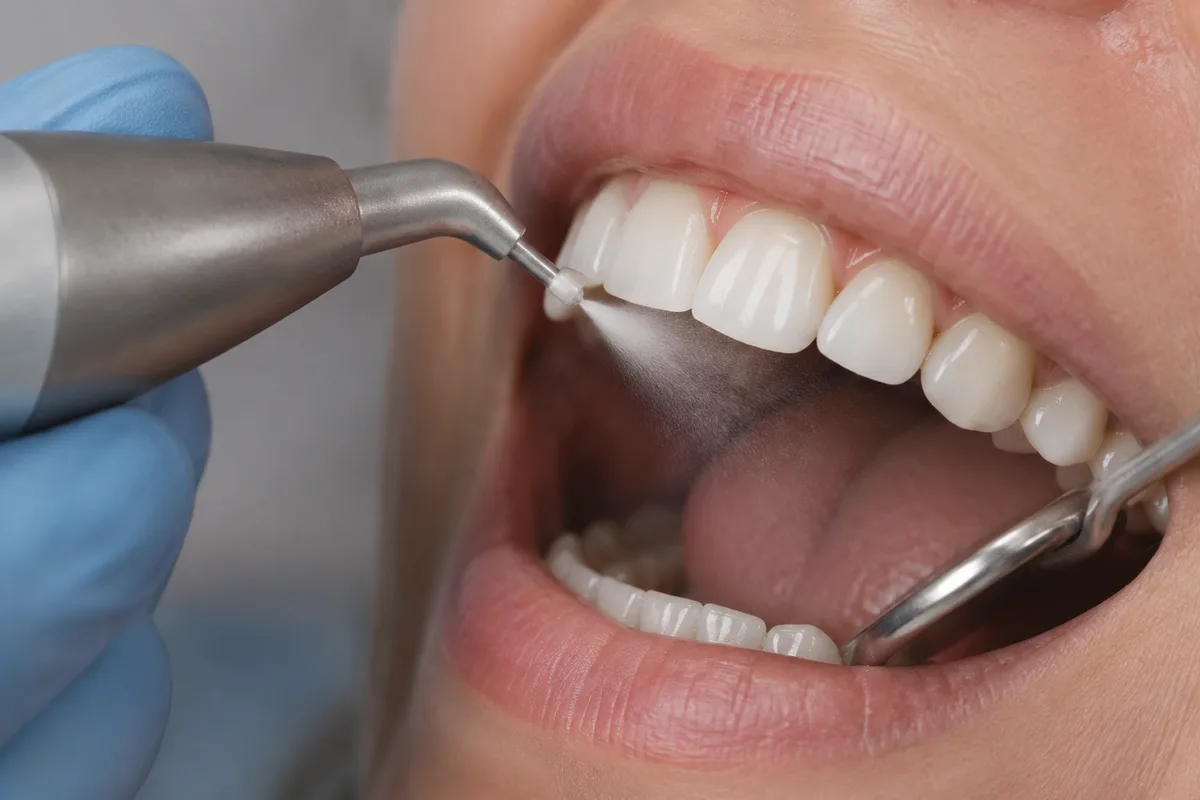
Air abrasion works by directing a fine, high-pressure stream of air mixed with tiny particles (usually aluminum oxide or a similar fine powder) at a targeted area of the tooth. The stream gently wears away decayed or damaged enamel, similar in principle to sandblasting but on a much smaller and more precise scale.
For certain kinds of small, shallow cavities, this approach can reduce or eliminate the need for a traditional dental drill. Because it does not rely on the spinning bur, vibration, and heat associated with drilling, air abrasion is often quieter and can be used without local anesthesia in appropriate cases. It is best suited to limited, surface-level decay rather than deep or extensive cavities, which may still require conventional drilling and a filling.
How we use it at Salm Dental
At Salm Dental, air abrasion is one of several tools Dr. Adam Salm, DMD, may use to treat small areas of decay, often without the drill, as noted on our facilities page. Whether it is the right choice for a given tooth depends on the size, depth, and location of the decay, which Dr. Salm evaluates using our other diagnostic tools.
Our Caries Detection Laser helps identify decay in its earliest stages, which is exactly the kind of finding that can make a tooth a good candidate for air abrasion instead of a more invasive approach. Digital X-Rays and our Intraoral Camera give Dr. Salm a clear picture of the tooth beforehand, and dental loupes allow him to work with a level of precision the naked eye alone cannot match. In some cases, air abrasion is used alongside Icon Resin Infiltration, our no-drill treatment for very early cavities and white spots, giving patients more than one conservative option to consider.
What it means for you
For patients, the appeal of air abrasion is generally comfort and conservation of healthy tooth structure. Because it targets only the decayed portion of the tooth, it tends to preserve more of the natural enamel around it compared to broader drilling.
Many patients also find it more comfortable simply because there is less vibration, less heat, and often no need for numbing. It can also mean a quicker appointment for small cavities, since there is no need to wait for anesthesia to take effect or wear off afterward. As with any dental treatment, whether these benefits apply depends on the specific tooth and the extent of decay.
What to expect during your visit
A visit involving air abrasion typically starts the same way any restorative visit would: an exam, a look at recent X-rays or images, and a conversation with Dr. Salm about the tooth in question and the treatment options available. If air abrasion is a good fit, he will explain how it works and what you can expect to feel.
During the procedure, a small handpiece directs the air-and-particle stream at the tooth while suction removes the fine powder and debris. Patients typically wear protective eyewear, and a dam or shield helps keep the spray contained. Most people feel little more than a light tapping or air pressure sensation rather than pain. The treated area for a single small cavity is usually finished within a matter of minutes, after which Dr. Salm places a filling material if needed. There is generally no numbness afterward, so you can return to normal eating and speaking right away.
Frequently asked questions
Is air abrasion safe?
Air abrasion is a well-established technique used in general dentistry for treating limited areas of decay. It avoids the heat and vibration of a traditional drill, and protective measures such as eyewear and suction are used throughout to keep the process comfortable and contained.
Does it hurt?
Most patients describe the sensation as a light tapping or air pressure rather than pain, and local anesthesia is often unnecessary. Because there is no vibration or heat buildup, many people find it more comfortable than a traditional drill for small cavities.
How long does the procedure take?
Treating a single small area of decay with air abrasion typically takes just a few minutes, though the full appointment will also include time for examination, any necessary imaging, and placement of a filling if one is needed.
Is air abrasion right for every cavity?
Air abrasion works best for small, shallow areas of decay near the tooth surface. Larger or deeper cavities, or those near existing fillings, often still require traditional drilling. Dr. Salm will assess your specific tooth and recommend the approach that best fits your situation.
If you would like to know whether air abrasion is a good option for your teeth, reach out to Salm Dental to schedule a visit and discuss it with Dr. Salm.